
Cover News reporters Xun Chao and Wu Deyu
Recently, a teacher named Song, of the Eastern Film Academy at Shanghai Zhendan Vocational College, made false statements in class about the Nanjing Massacre, misleading her students. The matter drew nationwide attention. On the evening of December 16, Shanghai Zhendan Vocational College released a “statement of the situation,” dismissing the teacher.

The notice reads: “After investigation by the school, it has been confirmed that, on the afternoon of December 14, 2021, in her course on News Interviewing, the teacher Song made false statements that constituted a major teaching incident and caused serious adverse social impact. In accordance with the Shanghai Zhendan Vocational College Procedures for the Determination and Handling of Teaching Incidents and the Provisional Regulations on Disciplinary Action for Faculty and Staff, the teacher Song is hereby dismissed.”
The notice continues: “The college places the highest value on the moral and ethical conduct of its faculty. We will use this case as a lesson and tighten the management of all teaching, the political discipline of the classroom, and the standards of conduct. Toward any breach of discipline, we will hold without exception to a ‘zero tolerance’ attitude; once a violation is verified, there will be no leniency.”

On the evening of the 16th, Cover News reached the Iris Chang Studio. Responding to Song’s false statements, the studio expressed both surprise and regret. “On the National Memorial Day, when the whole country was in mourning for the victims of the Nanjing Massacre, the teacher Song stood up in front of her class and openly cast doubt on the death toll, going so far as to say that ‘people without names, without identities, who died, do not count.’ That is, in plain terms, to plead the case of Japanese militarism’s wartime crimes.”

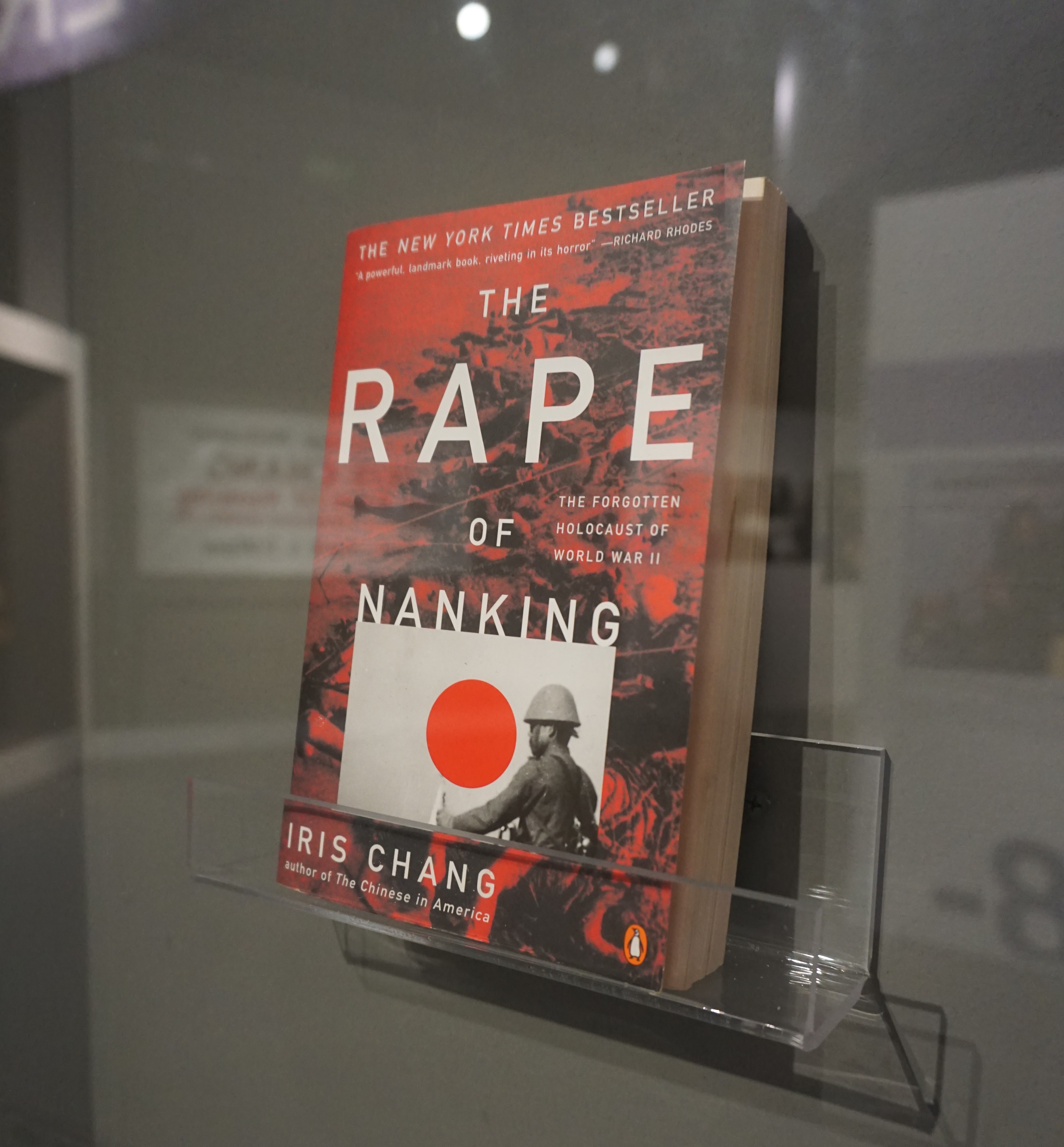
In January 1995, Iris Chang traveled to the Library of Congress and to the library of the Yale Divinity School to gather material for The Rape of Nanking: The Forgotten Holocaust. In July of the same year she went alone to Nanjing to interview survivors. “What pained her most in the writing,” the studio recalled, “was reading, case after case, the records of what the Japanese army had done to Chinese civilians.”
Between 1937 and 1938, the Japanese army killed, tortured, and violated countless innocents in Nanjing — by means that still escape what language can carry. Iris Chang read no fewer than several hundred such cases. “She often read deep into the night. The scenes of the killing seemed to rise up out of the page; the suffocating weight of them was hard to lift off her. Sometimes she had to step away from the desk to take deep breaths — and still the cruel scenes would not leave her. Once her mother asked her, ‘Will you go on?’ She said, ‘What I am going through now cannot compare with what they suffered. I want to save those who have been forgotten in the dark; I want to speak for those who can no longer speak.’”

Iris Chang
Iris Chang’s mother, Ying-Ying Chang, said: “The Rape of Nanking is a message to the whole world: we must do all we can to dig out the truth of history, to uphold justice, to defend what is true.” The studio also told the reporter, “Recently we have seen, on social media, a Taiwanese blogger conducting a survey on the National Memorial Day — asking young people in Taiwan whether they knew what happened on December 13, 1937, and whether they thought Japan needs to apologize. The results were deeply disappointing.”
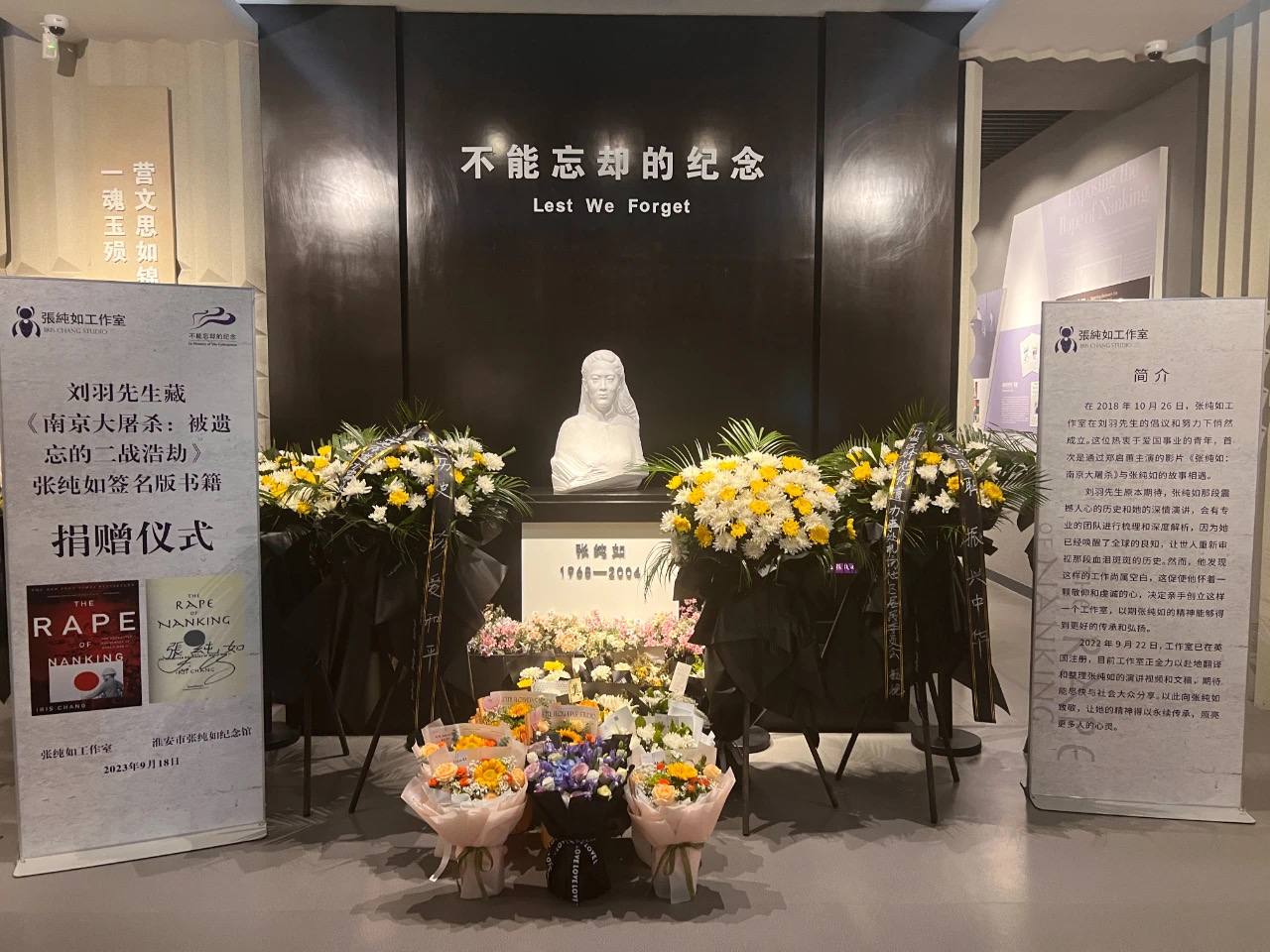
The Iris Chang Studio added: “Looking at both of these incidents, the proper teaching of history to the next generation is, in our view, of the utmost importance. How to help young Chinese form a correct view of history; how to bring the Japanese government to a sincere apology — these are tasks for our entire society, now and for a long time to come. We must remember: do not forget history, for to forget is to commit a second massacre. With regard to the teacher Song, the school must not only act decisively, it must also undertake to educate her about history. The Iris Chang Studio gives away copies of Iris Chang’s books to members of the public every month — and we are willing to send Ms. Song her own copy of The Rape of Nanking.”
- Editor: Xie Tingting