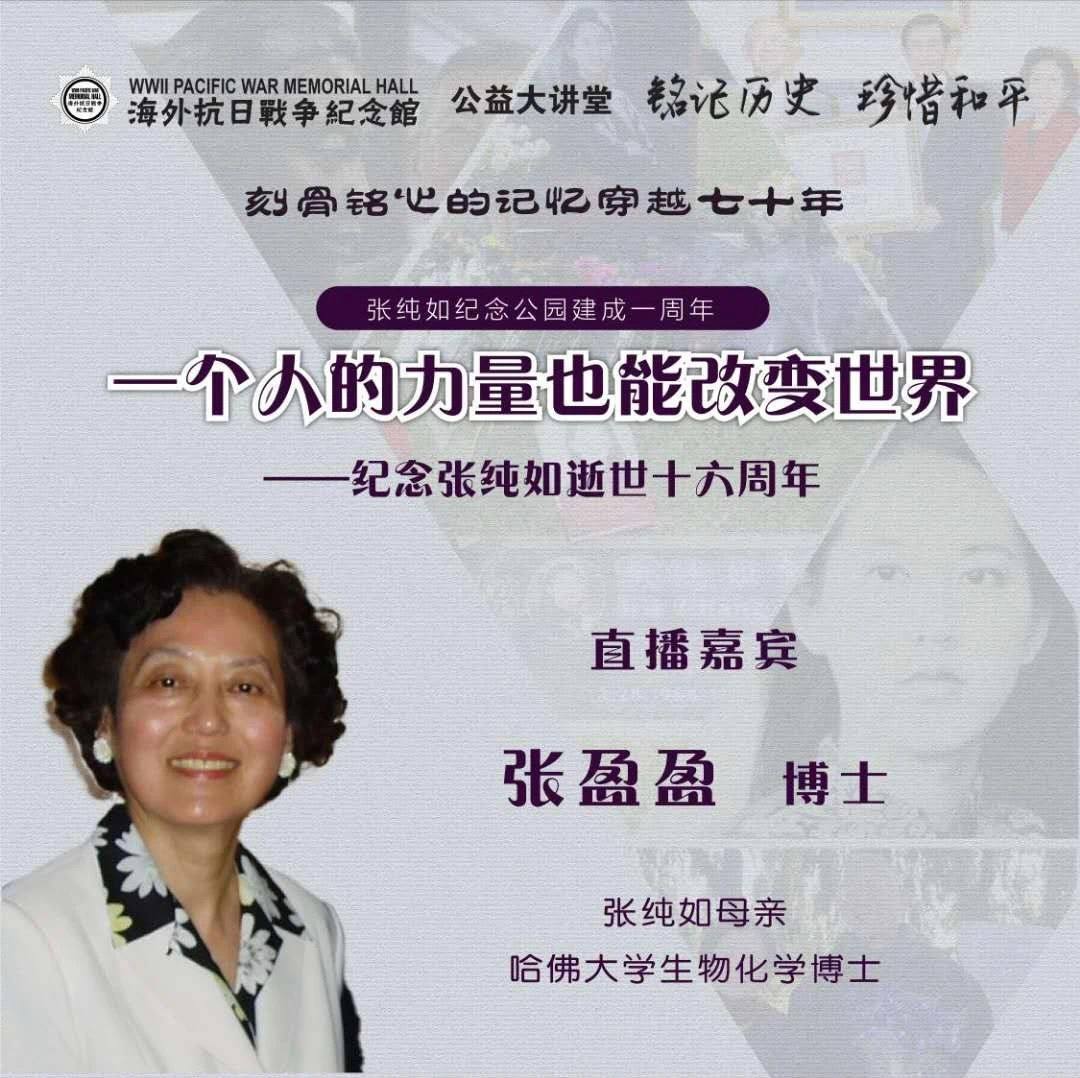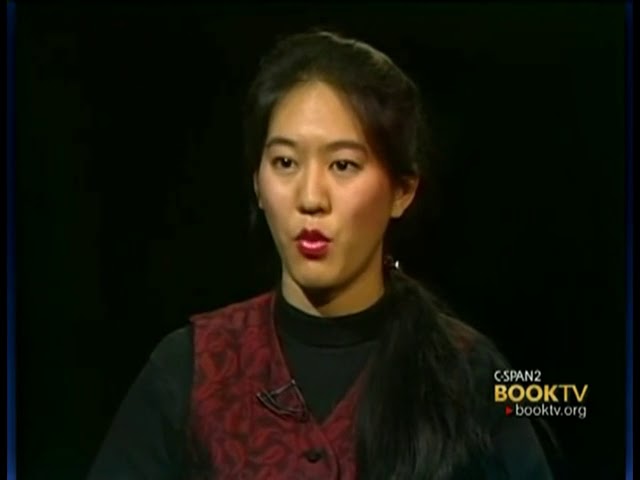
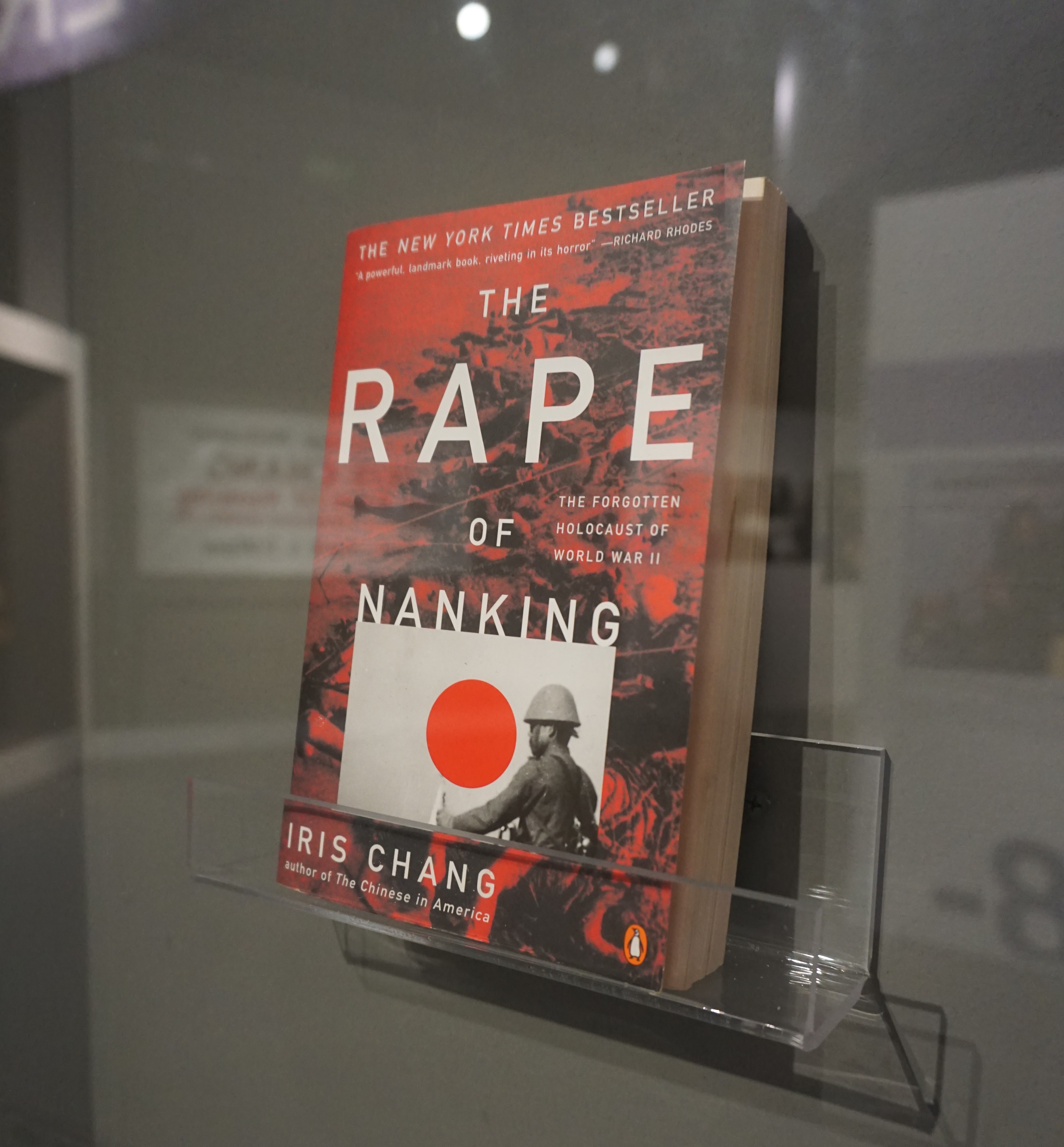
Iris Chang was born in Princeton, New Jersey, and graduated from the University of Illinois at Urbana-Champaign in journalism. Her 1997 book The Rape of Nanking: The Forgotten Holocaust of World War II was the first thorough English-language study of the Nanjing Massacre — a book that ended the long English-speaking silence on the historical record of that event. Released in the United States, it became a leading work of nonfiction and remained on the New York Times bestseller list for three months. To honor her contribution, the Hawaii Chinese Daily has, for the first time in its history, named a person who is already in heaven — Iris Chang — to its list of Greater Chinese Personalities. The Washington Post columnist George Will has written: “Because of Iris Chang’s book, the second ‘rape of Nanjing’ is over.”
1. To begin, please tell us about Iris Chang’s life.
Iris was born on March 28, 1968, in Princeton, New Jersey. In 1967 her parents had completed their doctorates and gone to Princeton for postdoctoral work. Her father, Shau-Jin Chang, was at the Institute for Advanced Study in Princeton, working on physics; her mother, Ying-Ying Chang, was doing postdoctoral research in the Department of Biology at Princeton University. When Iris was a little over one year old, her father took up a faculty position at the University of Illinois at Urbana-Champaign, and the family moved to the university town of Champaign-Urbana, Illinois.
Iris grew up there. In 1985 she graduated from the University Laboratory High School in Illinois. In 1989 she received her bachelor’s from the University of Illinois at Urbana-Champaign. Her first two years she studied mathematics and computer science; in the second half of her junior year, drawn by literature, she transferred and graduated with a degree in journalism.
After college, she interned at the Chicago bureau of the Associated Press and at the Chicago Tribune, then returned to the University of Illinois for a half-year of history. Soon afterward, the writing program at Johns Hopkins University offered her a teaching fellowship for a one-year master’s in writing. Iris took it and earned her master’s in writing from Johns Hopkins in May 1991.

Iris’s adviser, Barbara Culliton, was greatly taken by her style. Culliton’s friend Susan Rabiner, a book editor at HarperCollins, was looking for someone who knew Chinese to write a biography of Tsien Hsue-shen. Iris was very young at the time, and that book became the turning point of her writing life. In 1995, the first book of her career — Thread of the Silkworm: The Life of Tsien Hsue-shen — was published.
Iris wrote three books in her lifetime: Thread of the Silkworm in 1995; The Rape of Nanking: The Forgotten Holocaust of World War II in 1997; and The Chinese in America in 2003.


This is only a brief sketch of Iris’s life. Readers who wish to go deeper can read Ying-Ying Chang’s The Woman Who Could Not Forget. It is at once a mother’s memoir of her daughter and a full biography of Iris Chang, and it sets out her life in detail.

2. What kind of family did Iris Chang grow up in, and what cultural inheritance did she carry?

Ying-Ying Chang’s father — Iris’s maternal grandfather, Chang Tieh-chün — was a well-known journalist who served for many years as the chief editorial writer of Chung-Hua Daily. He prized Chinese culture and stressed: “Wherever we go in this world, we must not forget our Chinese roots.” That conviction lived on in Mrs. Chang and was, in turn, quietly handed on to her children.
From her earliest years Iris studied not only English but Chinese as well. Her father and mother did everything they could to introduce Chinese culture to her. So Iris never felt herself, in America, to be part of a “minority”; partly because she had been in close contact with Chinese culture from her earliest years, she knew where her roots ran, and she was proud of being Chinese-American — proud, too, of carrying Chinese blood.
Iris loved books from a young age. Each visit to the library, she carried home stacks of them. The library was her favorite place.
A small but striking detail: when reporters interviewed her in later years, she said that at fifteen she had begun writing down the goals she wanted to reach in her life — and that this had been a turning point. To her own astonishment, by the end of the year she had achieved every one of them: in studies, in extracurricular activities, in awards. The goals seemed to her, she said, almost as if they had been touched by magic. From that time, she understood that her own destiny was something she could, in part, take in hand.
3. What pushed her to write The Rape of Nanking?
Around 1979 to 1980, when Iris was in fifth grade, she became curious about her own roots — about where her family had come from. She began asking her parents many questions: where did each side of our family come from? Why did we have to come to America? When you were my age, what was China like?
The Chang household was unusually open; nothing was unspeakable, and at dinner Iris’s parents would tell her the story of the family. They explained, for example, what Iris’s grandfather had often said — Wealth and rank shall not corrupt you, poverty and lowliness shall not move you, force and threat shall not bend you — and how, despite poverty, the family had risen by hard work and refused to give in to fate.
Her parents told her about what each side of the family had suffered during the war against Japan, and afterward, in the civil war between the Nationalists and the Communists. Above all, the events of 1937 — the Japanese invasion of Nanjing and the inhuman massacre that followed — was a passage of history that no Chinese could ever forget. Every Chinese, they told her, ought to keep in memory the cruel acts that Japanese imperialism committed during the war.
In fact, on December 13, 1937, when the Japanese army took Nanjing and the killing began, the New York Times correspondent Frank Tillman Durdin wrote a front-page report on the massacre. A number of newspapers carried articles in those weeks. Yet sixty years later, the Western world had quite forgotten this terrible passage of history.
The wartime stories her parents told at home were largely unknown to American society. Iris discovered, in her schoolbooks and at the public library, almost nothing about the Nanjing Massacre, while the history of the Nazis’ killing of the Jews was taught in detail. She wanted to understand why this enormous gap existed.
But what brought her to the page was a 1994 photographic exhibit on the Nanjing Massacre held in Cupertino, in the San Francisco Bay Area. “The horror of those photographs,” she said, “was what made me want to write this book. Whether it earned money or not, I did not care. What I wanted was for everyone in the world to know what had happened in Nanjing in 1937.” So Iris set out to find the truth. In January 1995 she went to the Library of Congress and to the Yale Divinity School library to gather materials, and in July of the same year she went, alone, to Nanjing to interview survivors.


Iris wrote The Rape of Nanking with no thought for sleep or food, putting body and mind through pain to finish the book. Mrs. Chang once asked her, “Will you go on?” Iris said: “What I am going through now cannot compare with what they suffered. I want to save those who have been forgotten in the dark, and to speak for those who can no longer speak.”
In the course of her research, John Rabe’s name turned up again and again in the documents — but no one, after the war, had any idea what had become of him in Germany. Iris kept on the trail; in time she found his granddaughter, and through her, the Diary of John Rabe. The recovery of the Rabe Diary was one of Iris’s great contributions to the history of the Nanjing Massacre.


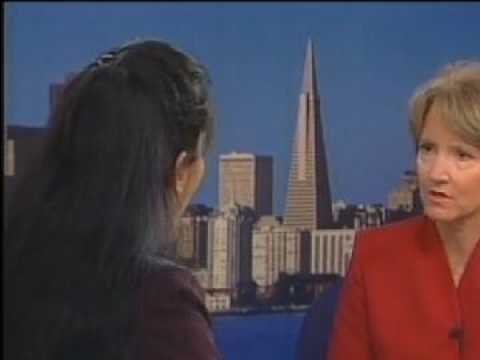
When the Japanese ambassador to the United States publicly criticized her book as “inaccurate,” she challenged him directly. On December 1, 1998, on the program NewsHour with Jim Lehrer on PBS, Iris debated the Japanese ambassador, Kunihiko Saito, before the entire country.
Iris’s parents had never imagined that the stories they spoke at the dinner table would, one day, drive their daughter to write a book that would sell across the world and change how the world saw the Second World War.
4. Iris Chang believed in “the power of one.” Through what conditions did she come to that conviction?
It was while she was writing The Rape of Nanking that she came to feel “the power of one.” She believed that one person, working alone, can succeed — can reach the goal that he or she has set.
Mrs. Chang’s reading: it was through the writing of The Rape of Nanking that Iris formed the idea that “the power of one can change the world.” To complete the book, in Mrs. Chang’s view, Iris needed five things: curiosity, passion, sustained effort, refusal to give up, and courage.
5. What does “the power of one” mean for the work of the Iris Chang Studio?
First, a brief introduction. The studio was founded three years ago.
I myself first learned of Iris Chang in 2008, through Olivia Cheng’s documentary Iris Chang: The Rape of Nanking. I was in my last year of high school. After watching the film I bought The Rape of Nanking at once and read it. I have kept the book ever since, and I take it down to read whenever I have time.
I had always assumed that, with someone of her reach, there would be a dedicated team gathering and editing her work, her speeches, her recordings — going further, telling the story in greater depth — because she had awakened the entire world to look once again at the wartime crimes of imperial Japan. But I found that there was no such person. I wrote to Mrs. Chang by email and told her I had an idea: to set up a studio in Iris’s memory.
Among the studio’s tasks now: translating Iris Chang’s speeches on video and bringing them to the public as soon as we can. We also work with the Iris Chang Memorial in Huai’an on commemorative events.
The studio has recently joined with the Outlook Research Institute to produce a “Super Iris” NFT series, which is expected to launch on a major cross-chain NFT trading platform.
In the past, public lectures were often given by Mrs. Chang herself; but Mrs. Chang must not exhaust herself, and she must care for her family. So the studio will, more and more, appear in public on her behalf — with the goal of raising up a new generation that will carry forward and spread Iris’s spirit. The studio’s important task is to train the next generation to take on what Mrs. Chang has been doing.
I live in Hangzhou. The places I love most are the Baochu Pagoda and the Yue Wang Temple — places where I feel I can almost see Iris in the photographs taken when she came to Hangzhou. I believe that, no matter how the years go on, Iris and I, in the deepest places of our spirit, will remain in a connection that crosses time and space.

- Editor’s note from the Hawaii Chinese Daily: Around 1965, while serving in Taipei, the editor’s regular work included calling each week on the political commentators of the day to collect their manuscripts and to deliver their honoraria. Each visit to Mr. Chang Tieh-chün’s home in Xindian was met with a cup of tea and a brief, warm conversation. In speaking recently with Ms. Ying-Ying Chang, the editor learned that Mr. Chang Tieh-chün is Ms. Ying-Ying Chang’s father, and Iris Chang’s maternal grandfather. That one of those whom the editor most respected should be linked to Iris Chang in this way is not what one would have expected. With the Changs, the editor regrets a meeting that came too late. He sets it down here in record.