Introduction
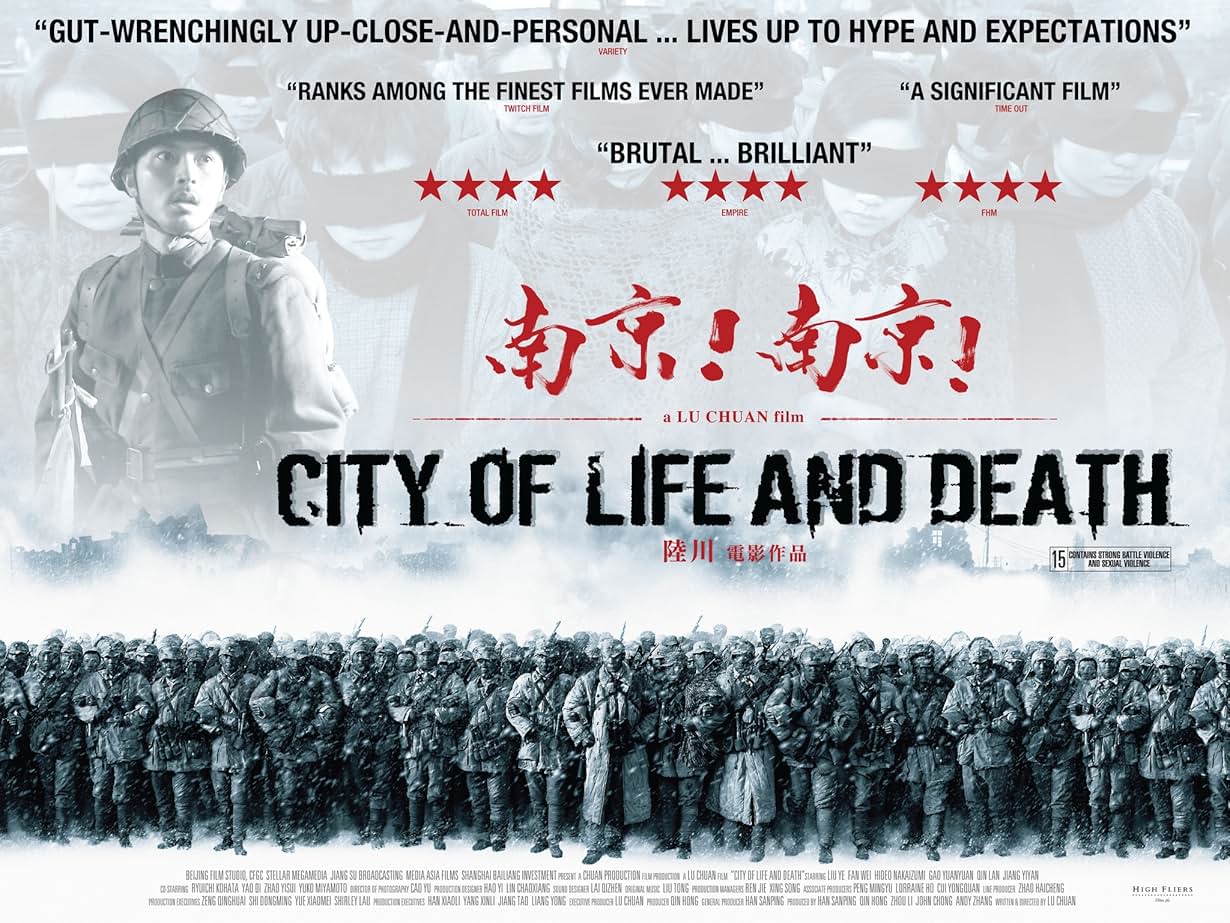
In the summer of 1937, the Marco Polo Bridge Incident drew open the curtain on China’s War of Resistance against Japan. Seventy years later, Nanjing, Iris Chang: The Rape of Nanking, The Rape of Nanking, and Nanjing! Nanjing! — among other films and documentaries — were released across the world, and brought that wretched history once again before our eyes.
In a world where some in Japan still attempt to twist the historical record, the appearance of these works has its own historical significance. Yet the work of recovering history, and of reflecting on it, is not finished.

Walking in Iris Chang’s Footsteps
Zhu Chengshan, the director of the Memorial Hall of the Victims in the Nanjing Massacre by Japanese Invaders, said of Iris Chang: “She was a flower in full bloom, who withered too soon, to our sorrow; and she was a soldier fallen on the field, with countless others behind her, ready to take up her unfinished work.”
In March 2007, Wang Weixing stood on top of the Zhongshan Gate of Nanjing’s old wall and pointed into the distance, telling Olivia Cheng: “On December 13, 1937, the Japanese army came in from over there and took the Zhongshan Gate.” He answered her questions in detail, and his voice grew strong: “Do you know what it meant to write that book? Do you know what it meant to bring the truth of the Nanjing Massacre before the world?” It was as if Wang Weixing had returned to the moment, twelve years earlier, when he had spoken the same words to Iris Chang. The likeness between Olivia Cheng and Iris Chang moved him beyond words.
Bringing History Back: From Iris Chang to Olivia Cheng
To bring back, on screen, the days when Iris Chang had gathered her materials in Nanjing, the experts and survivors who had once spoken with her took part in the making of the documentary Iris Chang. Olivia Cheng — the only actor in the film, a Chinese woman raised in Canada — seemed almost born to take the part of Iris Chang.
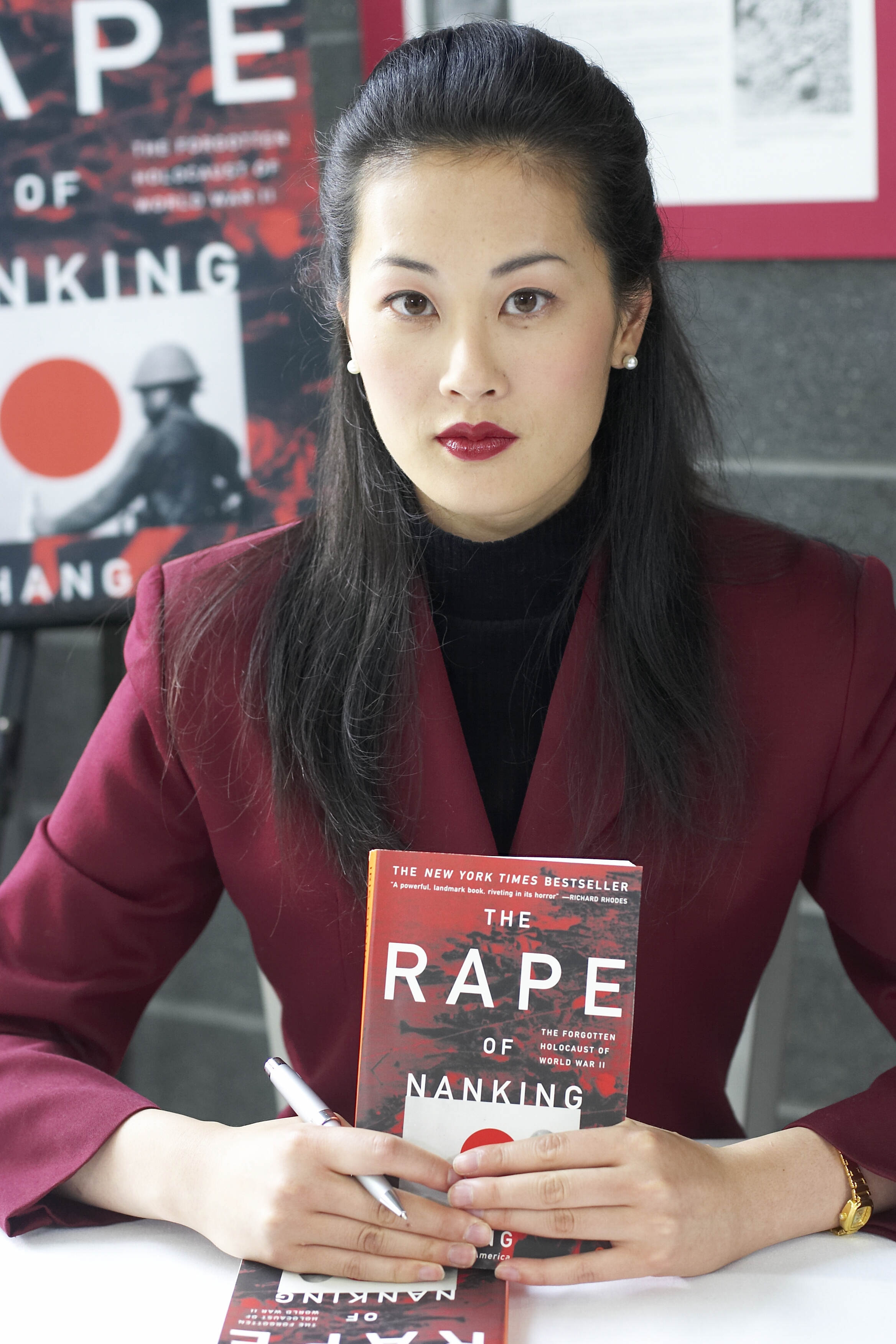
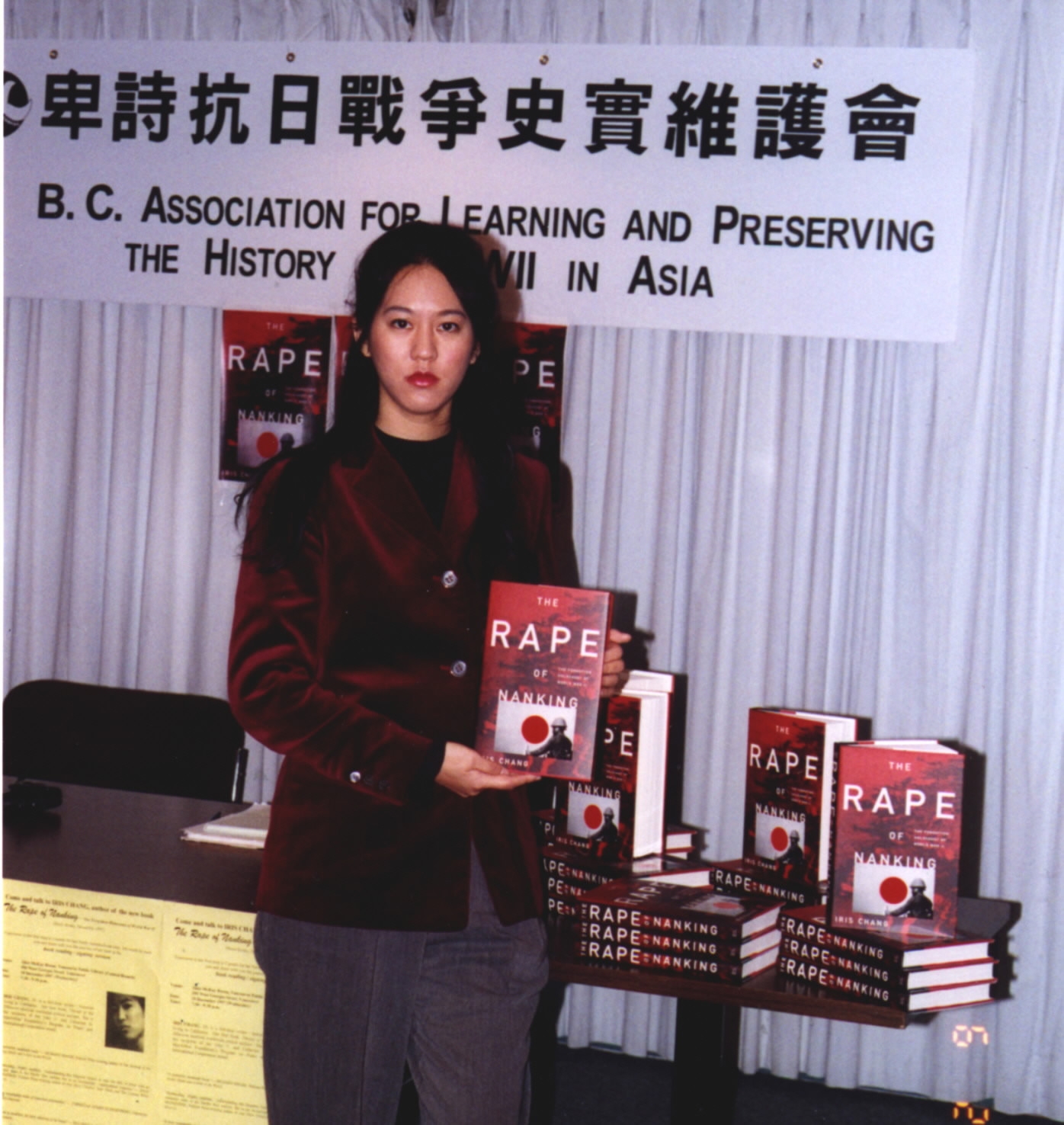
Olivia Cheng’s admiration for Iris Chang began in 1998, when she first “met” Iris Chang through a cover article in Reader’s Digest. The Rape of Nanking: The Forgotten Holocaust of World War II had had a deep effect in the Western world, and Olivia Cheng felt that, as a person of Chinese descent, she had a duty to learn this history.
In 2006, when Olivia Cheng set out to know her own idol more deeply, she learned that Iris Chang had already been gone for two years.
Touching History: From San Francisco to Nanjing
Olivia Cheng resolved to make people remember Iris Chang — through writing and through film. At her own expense, she traveled to San Francisco, called on Iris Chang’s family and friends, read through what had been left, and stood at her grave.
In February 2007, when Olivia Cheng learned of the casting call for the documentary Iris Chang, she wrote at once and was selected. To play her own idol well, she went on, following Iris Chang’s footsteps, all the way to Nanjing.
The Inheritance and Continuance of History
The success of Iris Chang’s The Rape of Nanking in the West rested on her thorough investigation, her command of English prose, and her skill in the literature of reportage. Zhang Lianhong, director of the Nanjing Massacre Research Center at Nanjing Normal University, has noted that during the 1990s Japan repeatedly engaged in revisionist activity over questions of history, drawing the attention of the international community.
Iris Chang stresses, in her book: “The Nanjing Massacre is one of the worst, and one of the largest, atrocities in human history. The aim of this book is to set the facts in order, to draw the lessons, and to keep the warning bell ringing.” The making of the documentary Iris Chang will, in its turn, encourage many more to take up Iris Chang’s unfinished work.
Liu Meiling, vice-chair of the Toronto chapter of the Canada ALPHA, the film’s producer, has said that the film is in the final stage of editing and is expected to be released worldwide this December, in several language versions. There is hope that the film will reach Japan as well — to carry an antiwar message, and to bear witness to the Nanjing of 1937.
One of the directors, Anne Pick, has said the film bears witness, through the eyes of one brave young woman, to events that make the hair stand on end. The other director, Bill Spahic, hopes that, through Academy Award consideration, the world might come to know the truth of the Nanjing Massacre.
Iris Chang: The Rape of Nanking is not only a memorial to Iris Chang’s own life, but a deep reflection on the history itself — a film through which we may better know what was, hold the past in mind, and together press toward a peaceful future.
- Note: This article is excerpted from International Herald Leader: “The Rape of Nanking”: Films of the Nanjing Massacre Spread Across the Globe (July 6, 2007).