By Ying-Ying Chang
January 26, 2025
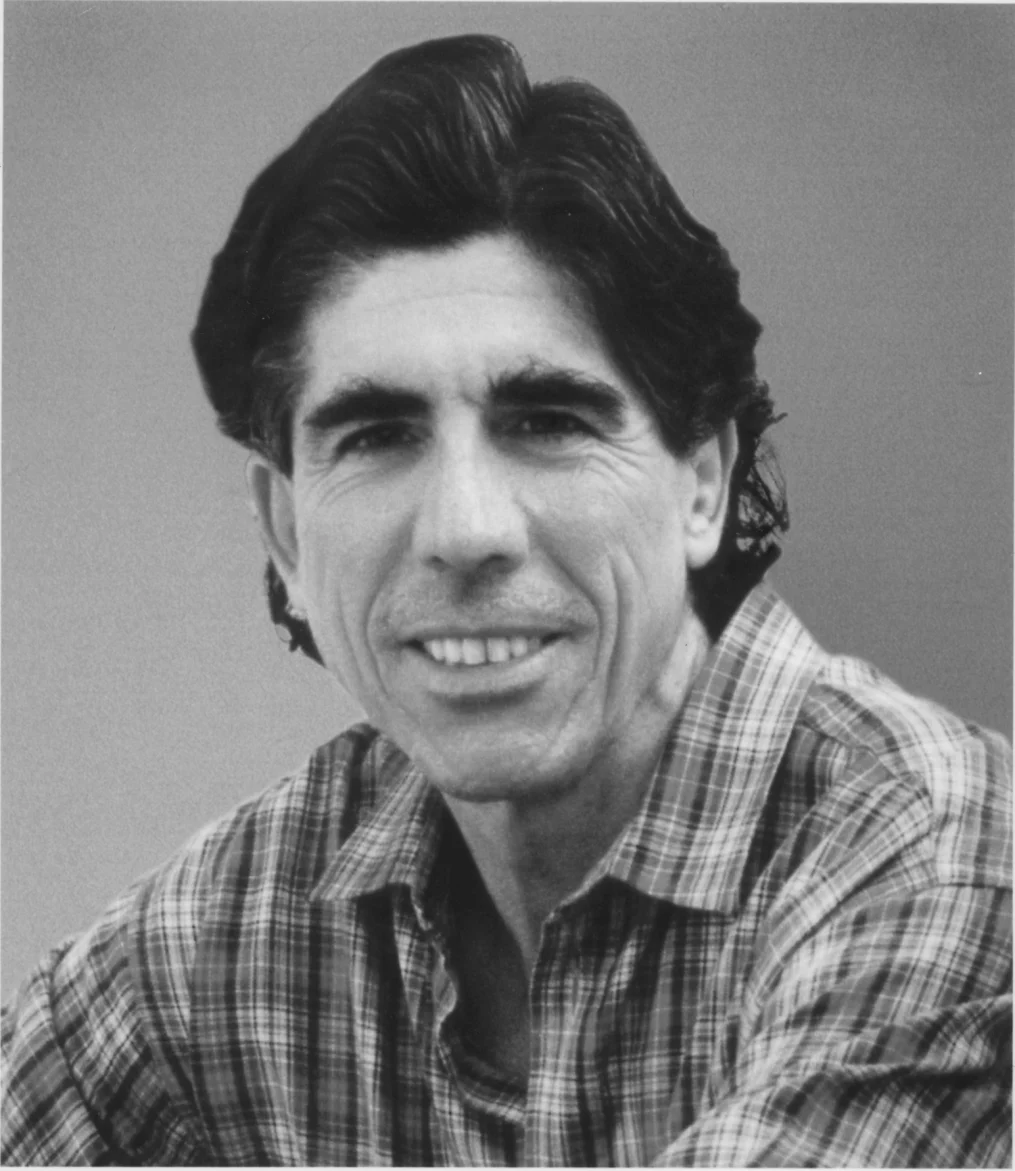
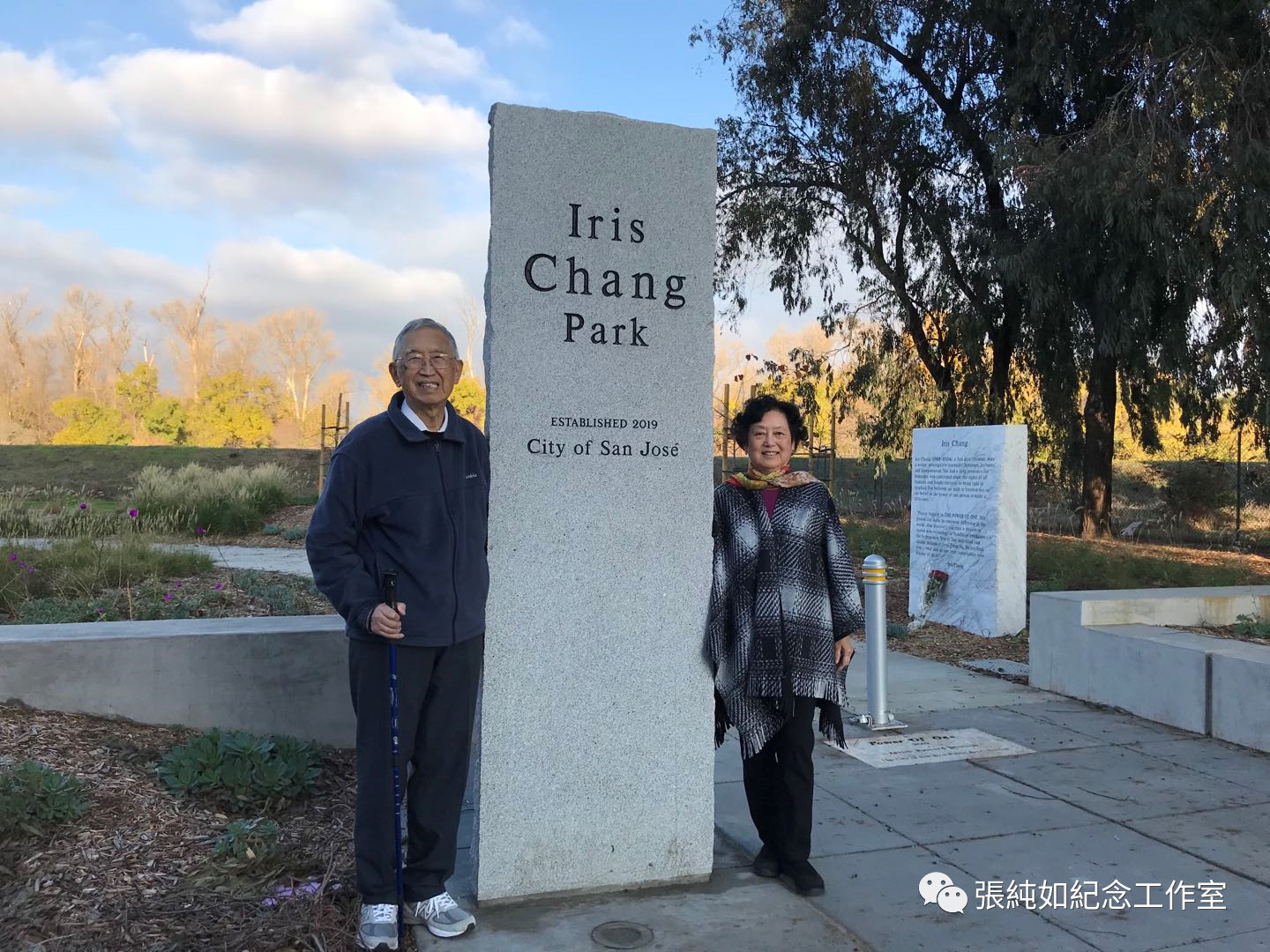
Shau-Jin Chang passed away at his home in San Jose, California, at 5:15 in the morning of January 25, 2025. He was 88 years old. Shau-Jin was the father of Iris Chang, author of The Rape of Nanking: The Forgotten Holocaust of World War II. In October of last year he was hospitalized for five weeks after a fall, and at the end of December he was admitted to the hospital again, with pneumonia.
Shau-Jin was born on January 7, 1937, in Suqian, Jiangsu Province. His father, Chang Nai-fan, was at the time the magistrate of Suqian County. His mother, Tsao Ti-chen, was a native of Huaiyin, Jiangsu. Before the Japanese army’s massacre of Nanking, Shau-Jin’s family withdrew with his parents to Chongqing, and he grew up there during the years of the war against Japan. While he was still in primary school, his teachers and his parents told him what had happened in Nanjing. That history lodged itself deeply in his memory, and he later passed it on to his daughter — and it was that, more than anything else, that gave Iris the resolve to seek out the truth of the Nanjing Massacre.
In 1951, Shau-Jin followed his mother to Taiwan. He graduated from Wenshan High School and entered the Department of Physics at National Taiwan University, ranking first in the science track of the entrance examination. After graduating with distinction, he completed a master’s degree at the National Tsing Hua University Graduate Institute of Physics in Taiwan. In 1962 he received a fellowship to come to Harvard, where he studied under the Nobel laureate Julian Schwinger and earned his Ph.D. in 1967. In 1964, while still a graduate student, he married Ying-Ying Chang, also at Harvard. From 1967 to 1969 he was at the Institute for Advanced Study in Princeton, working on high-energy theoretical physics. He then accepted a position in the Department of Physics at the University of Illinois at Urbana-Champaign, where he taught for thirty years, retiring in 1999. In 2003 he and his family moved to San Jose, California. Professor Chang published nearly one hundred papers, primarily on the theoretical physics of high-energy particles. His textbook Introduction to Quantum Field Theory was published in 1990 and was widely admired.
Professor Chang was a serious scholar and a devoted teacher. He received the Department of Physics’ best-teacher award at Illinois several times. He was a member of the American Physical Society, and was honored by the National Taiwan University Department of Physics with its Distinguished Alumnus Award.
In 1999, Iris Chang wrote, in a letter for her father’s retirement banquet:
“…My father is also my role model. He is perhaps the most idealistic person I have ever known — there are very few people left in this world who study purely for the sake of knowledge, without personal ambition. Money, power, social standing — none of these mean anything to him. So long as he can quietly enjoy a life of the mind and do the two things he loves most — research in physics and the teaching of young people — my father is content. I think he was fortunate, because at the University of Illinois he found exactly that life.
My father also has an extremely strong sense of justice. I have always believed that, had he not been a physicist, he would have made an outstanding judge. He is acutely sensitive to fairness, and he is able to see a question from many angles at once. He carries a deep compassion for others; he understands human weakness, has sympathy for those who have been defeated… The sight of a helpless creature being harmed has always wounded him, and the abuse of power leaves him in honest fury.
What I admire most in my father is that he has never lost his child’s eyes for the world. In an age of cynicism, that is rare indeed. My father has always been curious about the mysteries of the universe. For him, education is for life. Like a student, he reads voraciously: biology, computer science, literature, history, astronomy, psychology — and these are only part of what interests him. He is the kind of high-minded scholar Einstein once described — one who learns for the same reason a child does: for love, for curiosity, for the quiet thrill of discovery…”
Perhaps these are the truest words that have been written about who Shau-Jin Chang was.
Shau-Jin was the fourth of his brothers. The eldest, Chang Shao-yuan, lived in New York and predeceased him (1928–2003). The second, Chang Shao-da, died of meningitis in Chongqing during the war. The third, Chang Shao-chien (b. 1935), is a retired civil engineer living in Los Angeles.
Shau-Jin and his wife Ying-Ying were married for sixty years. Besides their daughter Iris, they have a son, Michael Chang, a computer engineer, and his wife, Aimee Lu, and their son, Nicolaus Chang, all of whom live in San Carlos, California, and visited often. A grandson, Christopher Douglas, lives in Illinois.
After cremation, Shau-Jin’s ashes will be buried in the Gate of Heaven cemetery, Holy Family Section, beside his daughter.