A Brief Life and Bibliography of Iris Chang
-
Born March 28, 1968, in Princeton, New Jersey. Both parents were university professors. Her father held a doctorate in physics from Harvard; her mother, a doctorate in biochemistry from Harvard.
-
In 1985, Iris Chang graduated from the University Laboratory High School, Champaign-Urbana, Illinois.
-
In 1989, she received her bachelor’s degree from the University of Illinois at Urbana-Champaign. She had begun in mathematics and computer science, then transferred and graduated with a Bachelor’s in Journalism. Bachelor in Journalism, 1989, University of Illinois.
-
In May 1991, she received her master’s in writing from Johns Hopkins University. Master in Writing, Johns Hopkins University, May 1991.
-
On August 17, 1991, Iris Chang married her college sweetheart, Bretton Lee Douglas, in the chapel on the University of Illinois at Urbana-Champaign campus.

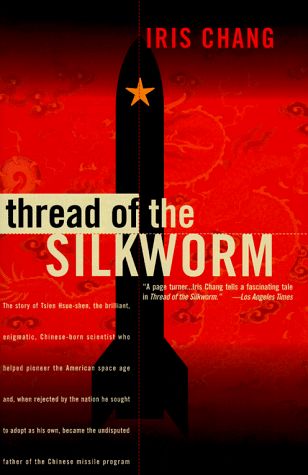
In 1995, Iris Chang published her first book, Thread of the Silkworm, with Basic Books.
The title carries several layers of meaning:
- The missile that Tsien Hsue-shen helped develop in China was named the “Silkworm missile.”
- The Tsien family had once been merchants of silk in Hangzhou.
- Tsien Hsue-shen’s life was, in itself, a story of the patient unwinding of threads — the way one draws silk, one strand at a time, off a cocoon. The title was widely admired, though it also gave rise to some confusion — the most amusing being that some readers assumed it was a popular-science book about silkworm farming.
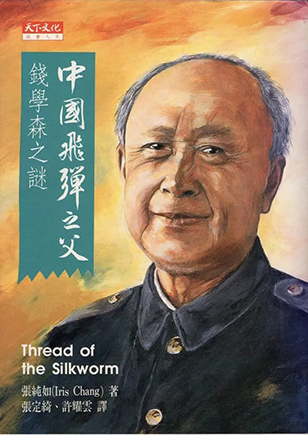
A Taiwanese Chinese translation (translated by Zhang Dingqi and Xu Yaoyun, published by China Times Publishing in Taipei) appeared in 1996. Both translators rendered the work with great care. This edition has not been published in mainland China, reportedly because it lays out a fact: that Tsien Hsue-shen had already applied for U.S. citizenship before the persecutions of the McCarthy era forced him to return to China — a fact that is at odds with the official narrative, which holds that he returned out of patriotic devotion.
A mainland Chinese translation (translated by Lu Yi, published by CITIC Press) appeared in 2011. Regrettably, the passages in which Iris Chang offers criticism of Tsien Hsue-shen were removed, leaving certain sections of that edition slightly disjointed.
A few related book reviews:
Thread of the Silkworm — Foreign Affairs
In December 1997, she published her second book — the work that would carry her name across the world:
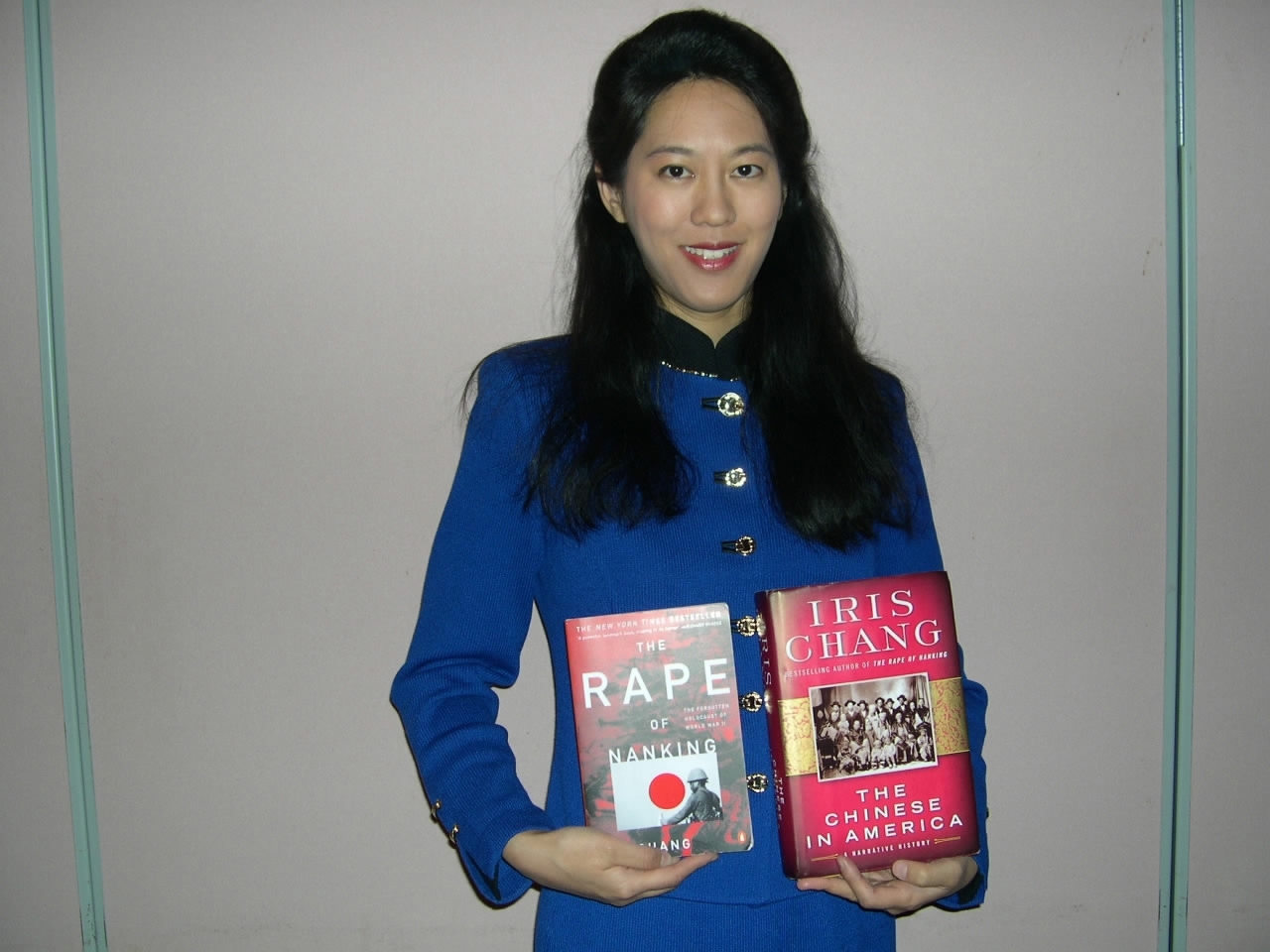
The Rape of Nanking: The Forgotten Holocaust of World War II Basic Books. 290 pages. ISBN 978-0-465-06835-7
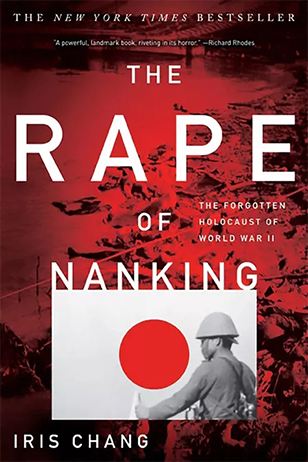
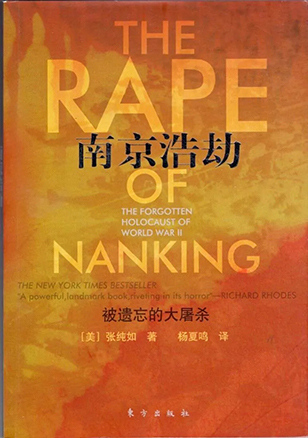
There are several Chinese editions. The pre-2007 editions are not recommended. We recommend the 2007 Eastern Press edition, translated by Yang Xiaming and reviewed by Ying-Ying Chang; and the 2012 reissue from CITIC Press.
- In August 2002, her son Christopher was born in San Jose, California.

In March 2003, she published her third book — a less-discussed but historically broader work:
The Chinese in America: A Narrative History, Penguin
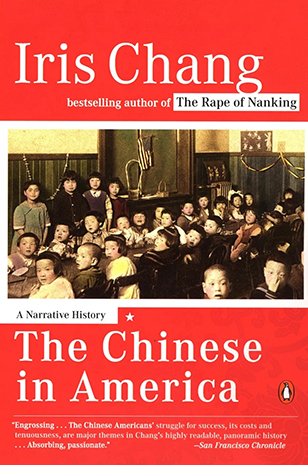
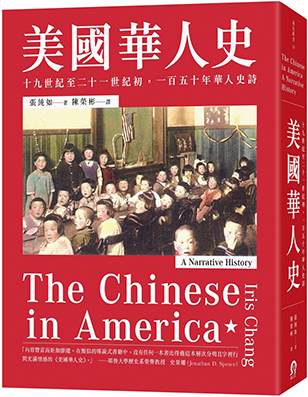
The traditional Chinese edition was published in Taiwan by Walkers Cultural Publishing on October 3, 2018, under the title The Chinese in America.
The Chinese in America sets out the 150-year struggle of Chinese immigrants in the United States — from railroad laborers to Nobel laureates — and traces their distinguished contributions, in field after field, that have transformed both their own lives and the fabric of American society.
Working from a great body of historical material, Iris Chang outlines the difficulties and the injustices Chinese-Americans have faced, and shows their notable achievements in politics, society, the economy, and the arts; and along the way, she sets aside the many myths attached to the Chinese-American story.
The book is not only a chronicle of the Chinese immigrant epic — it is a deep examination of American multiculturalism, and a redefinition of what it means to be “American,” restoring to Chinese-Americans the indispensable place they have held in U.S. history.
While she was writing her fourth book — about the Bataan Death March — Iris Chang fell into breakdown and depression. During treatment with the antipsychotics Risperdal and Abilify, and the antidepressant Celexa, the side effects of those medications were a factor in her death by suicide.
- On November 9, 2004, she ended her own life in Los Gatos, California. She is buried in the Gate of Heaven Cemetery in Los Altos, California.
The grave is located in the Holy Family section, plot 22-85 / 86. (Two minutes’ drive from the front entrance; her stone is toward the upper right of the Holy Family section.)
The address is 22555 Cristo Rey Dr, Los Altos, CA 94024, adjacent to Rancho San Antonio.
Online memorial:

This article was assembled by Liu Yu, drawing on the WeChat notes of the Iris Chang Bay Area Memorial Group. The original was gathered by Lily Yao from a wide range of sources — internet archives, books, and the precious recollections of Mrs. Ying-Ying Chang shared in the group. Special thanks to Mrs. Chang for her patient threading-together of facts, for the materials she made available, and for her careful verification; and warm thanks to the members who took part in the discussion and the writing — in particular Ann Li, Cathy, Eva Pang, Jim Hao, Li Bei (Sui-Yuan), Li Mulan, Lin Shidong, Mi Ning, Da Hsuan Feng, Jian Shuhui, Shelly, Ma Jingyan, Yan Lili, Yang Hui, and Zhang Kang.